Monday, 17 October 2016

Advice: Swim or Sink in Research

I lose motivation every now and then. I try to find it by looking at different motivational blogs. But nothing motivates more than a fellow scientist telling you how to brace yourself for the daily troubles. Then, I chanced upon this golden advice(pdf) from Prof Steven Weinberg, a renowned Theoretical Physicist from University of Texas. It is very important to keep ourselves motivated in the research we are doing. I found his advice very useful. He focuses on giving a beautiful analogy to help us surf the vast ocean of Science literature which is increasing by leaps and bounds every year. It is easy to get lost and overwhelmed. I am not ashamed to admit that it happened to me.
So, in his own words, four important lessons you need to remember:
    steven-weinberg-4
  1. Sink or Swim - I must start doing research, and pick up what I needed to know as I went along.. To my surprise, I found that this works. I managed to get a quick PhD — though when I got it I knew almost nothing about physics. But I did learn one big thing: that no one knows everything, and you don’t have to. 
  2. While you are swimming and not sinking you should aim for rough water -.My advice is to go for the messes — that’s where the action is. 
  3. Forgive yourself for wasting time As you will never be sure which are the right problems to work on, most of the time that you spend in the laboratory or at your desk will be wasted. If you want to be creative, then you will have to get used to spending most of your time not being creative, to being becalmed on the ocean of scientific knowledge. 
  4. Finally, Learn something about the History of Science,or at a minimum the history of your own branch of science. The least important reason for this is that the history may actually be of some use to you in your own scientific work. The best antidote to the philosophy of science is a knowledge of the history of science. 
This was just one step(discovering the origin of earth and sun) in a sequence of steps from Galileo through Newton and Darwin to the present that,time after time,has weakened the hold of religious dogmatism. Reading any newspaper nowadays is enough to show you that this work is not yet complete. But it is civilizing work, of which scientists are able to feel proud.
Excerpts from article published in Nature.

Another interesting quote is from Ira Glass which touches on the Writer's block which one faces soon after you engage in a creative activity. This dull phase, he states, will go soon. You have to fight your way through.

Ira Glass
Ira Glass, American public radio personality
Nobody tells this to people who are beginners, I wish someone told me. All of us who do creative work, we get into it because we have good taste. But there is this gap.
For the first couple years you make stuff, it’s just not that good. It’s trying to be good, it has potential, but it’s not. But your taste, the thing that got you into the game, is still killer. And your taste is why your work disappoints you. 
A lot of people never get past this phase, they quit. Most people I know who do interesting, creative work went through years of this. We know our work doesn’t have this special thing that we want it to have. We all go through this. And if you are just starting out or you are still in this phase, you gotta know its normal and the most important thing you can do is do a lot of work. Put yourself on a deadline so that every week you will finish one story. It is only by going through a volume of work that you will close that gap, and your work will be as good as your ambitions. And I took longer to figure out how to do this than anyone I’ve ever met. It’s gonna take awhile. It’s normal to take awhile. You’ve just gotta fight your way through.          -Ira Glass

Gavin from Zen Pencils has made a beautiful illustration of this quote here.

Tuesday, 22 December 2015

Finally got a PhD, moving on to PostDoc: 2016 Here I come

Hi all,

Finally got a PhD in December and going for a PostDoc under my supervisor. It was indeed so happy and relieving. We struggle so hard and feel the stress of an impending boom and once you finish your defense and submit your thesis back. There is a fresh breath of air and you feel a lot better in terms of achievement and understanding the purpose of life.

I am continuing my academic saga for a while; before anything else drags me away. I hopefully can get some interesting results next year. Last year was a hell lot of year with hardly any money and mainly subsisting on support both moral and financial from friends and families. This coming year is promising and I hope I can reverse my trends upset by my PhD's low points. We have to dust ourselves up and move forward with a grit and determination to achieve the new heights.

Personally, I think I have a lot to learn in Photonics still. You can try to keep up as much, still the crowd around you keeps moving forward at an unimaginable pace. And one has to ensure to move with the crowd and not get left out. Learning is not enough. But achieving something new is more important.

Therefore, I have to set some personal goals to become better me next year. I hope if I speak them out publicly I will be more accountable. Without ado, here we go :
  1. Get healthy
    1. Get Exercise/Games Regularly  
    2. Reduce my weight by 5 kgs
    3. Get 7 hrs of sleep on time
  2. Plan your work and work the plan
    1. Don't wait for deadlines to fall on your head
    2. Focus on one thing and wait for it to finish. Other things can wait. But finish this very thing and move on.
    3. Write more and send more papers to the press
  3. Get more organized : work/home/life 
    1. Aim for balance
    2. Reduce the extras and declutter : Just the essentials
  4. Learn People skills
    1. Art of delegation :Distributing the workload
    2. Appreciation and motivation
    3. Art of collaboration: Complement your abilities and work in unison to produce value
    4. Present your work better
This would be my wishlist for becoming a better person next year academically and professionally.
Even if I get better in half of these things, I would be more efficient and these habits will boost my confidence. Hope it inspires you as well to formulate your own list. I will try to implement this even before the new year starts and hope to keep a tab on my progress. Observation is the key to the execution of these behaviors before they become habits. Once they become habits, we can sit back and routine will help us to do better subconsciously.
Alrighty then !


Wednesday, 21 October 2015

As a scientist, fooling yourself = failing yourself !

It is not uncommon in research to fall prey to make experimental data to fit your hypothesis instead of building a hypothesis based on the facts. There are many pitfalls in a scientific investigation and one must be wary of how you interpret and analyse your results. For a nice guide to avoid these fallacies, Nature has put this infographic in their news article.
Adapted from Nature

I learnt this from the following link: 
 http://conceptpickings.com/2015/10/13/scientific-methods-and-statistical-interpretations-to-believe-or-not-to-believe-that-is-the-question/

Sunday, 4 October 2015

Softwares you need to know for your Physics PhD

When you are starting a PhD project, you need to be really sure that the next 4-5 years of your life are going to be spent on something really long project with few tangible outcomes and more of inner growth. Along with that mental preparation, you also need to learn a bunch of software which you will need when you are generating piles and piles of data. And at that point of time, you may not want to stop for learning when you should actually be doing ! So, go ahead and mess your brains with all these efficiency boosting programs.

  1. MS Office - For anything related to writing reports to presentations, MS Office is a must. You must know how to use these to your advantage and with minimal effort. Making breath-taking presentations on the fly is a skill and needs to be honed. So, read up on Presentation do's and don'ts'. 
  2. $\LaTeX\ $ - Do we really need this or not ? This is a raging debate from a long long time. The question here will be how willing are you to program to write a document. If you are okay with coding a few lines to make your report happen instead of adjusting all kinds of formatting on MSWord, then $\LaTeX\ $ is for you and you must start investing some amount of time learning it. Cool part about $\LaTeX\ $ is that there are thousands of templates available on web which you can just download and start editing. If you need a quick start to installation and using Latex, check this out.
  3. Excel (Calculations) - For any quick calculation, you can turn to friendly Excel, for a quick view of what data looks like or minor processing of data, statistical analysis can all be easily done. You need to learn this thoroughly too so that when you have your experiments done, you have atleast one software tool at hand to analyse these graphs.
  4. Matlab/Mathematica - Every Physics student at one time of his life has to interact with Matlab either through coursework or through research. It is one of those essential tools with which you can create entire set of data analysis functions for your raw, unprocessed data and produce cool looking surface plots. So Matlab is generally good for solving problems by using numbers. You can also solve equations with symbolic math toolbox, but Mathematica is actually just made for solving equations analytically. Many students use Mathematica to solve their equations for them and it is again a worthy tool to learn and put use in difficult times. Open source options are Scilab(Multi-platform), GNU Octave(Linux based), Scipy(Python based) which have good functionalities for basic calculation but may not have all the amazing toolboxes Matlab or Mathematica give. 
  5. Data Plotting Software - Origin or any other data plotting software are meant for plotting data unlike Excel which was meant for handling balance sheets and what not. So, Origin gives more control over all the different plot elements and allows you to integrate editable graphs in your word document or PowerPoint presentation. This handles your data collection pretty well in different folders, books, sheets and so on. You can also create templates for similar data sets and the entire process can be automated by just importing the raw data into the template. How cool is that ? Other similar software need a mention too. One is Igor Pro which is proprietary and people say is as good as Origin. I have never used it. Then, there is GNUplot, an open source software, which can make publication ready high-res graphs and images. The only caveat is that it is completely command line based. So you might have to learn a few commands in order to get started.
  6. CAD Software - Depending on the type of your project, theoretical or experimental, you may or may not need this particular group of software. But still you can make cool 3D figures with these and that adds a lot of value for any publication. Good to learn atleast one type thoroughly. There are many of them : AutoCAD, Solidworks, Sketchup, DraftSight(2D). For open source, look for FreeCAD and QCAD. 
  7. Citation Software - Please manage your citation collections from the beginning till the end of your research. And these collections can grow disproportionately. So find the right software you like using and stick with it. It is a pain to move bibliography databases from one format/software to other. There are many in the market to choose from : EndNote(paid, web and desktop based), Mendeley(free, web and desktop based), Zotero(free, browser based), Wizfolio etc. I will use another post to highlight the pros and cons of these softwares. I still have not found the key that works for all.
  8. LabView - This software is absolutely important piece needed for your PhD puzzle. Many puzzles were left incomplete because students did not know how to control a particular equipment or automate an experiment. In this Digital age, we need to automate and control things through computer to make efficient use of our time and reproduce data with higher accuracy and precision. This was the sole reason why computers were invented; to do the slow and dumb things while we think about new ideas and thoughts. Therefore, any experimental Physics PhD is incomplete without learning LabView. Learn it during your PhD at any cost because later you will need this when you setup your own lab or experiment. 
These are the softwares I think are bare minimum for Physics PhD. If you know anything else which I might have missed, then just drop in a comment. All the best for your new journey !


Thursday, 24 September 2015

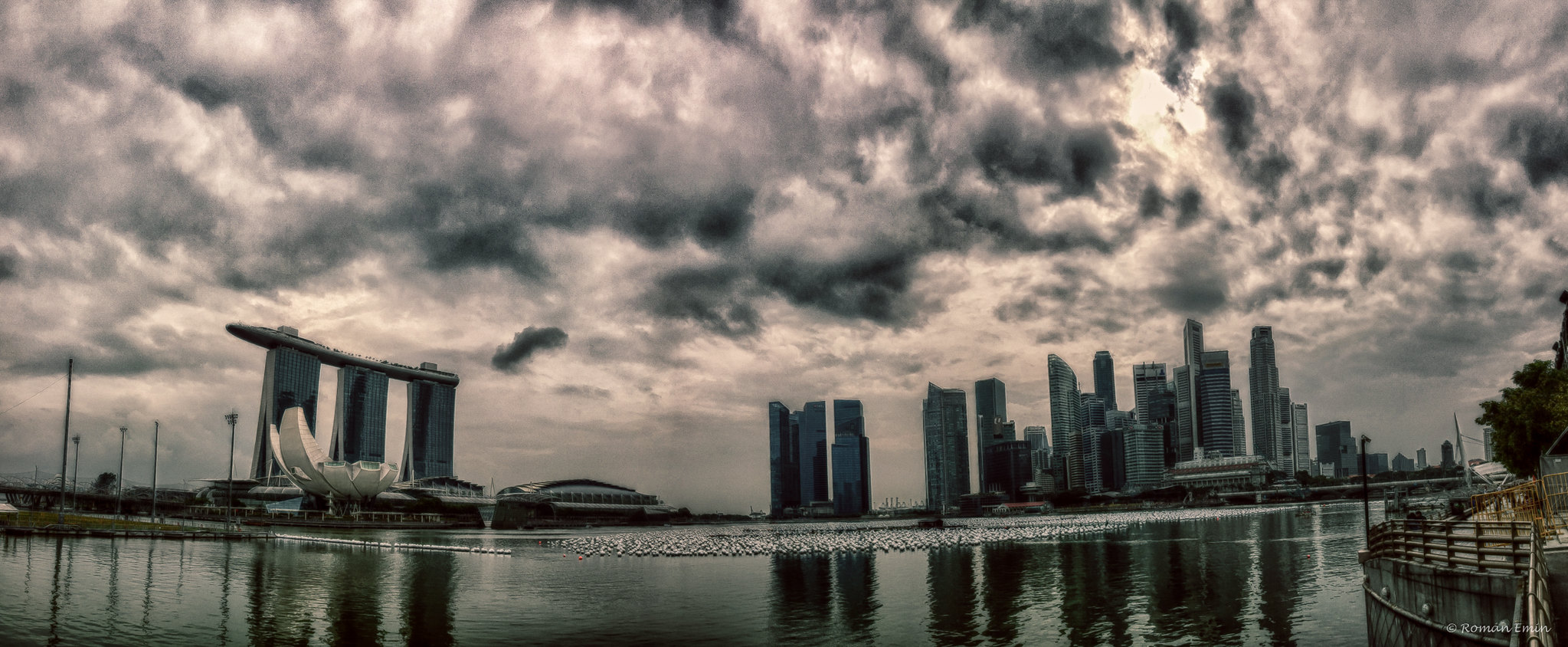
Things to do once you arrive in Singapore as a student/professional for long term visit

Singapore.
CC Image Courtesy: Román Emin from flickr
You are coming to Singapore for a fairly long visit. You already have your passport, tickets and other usuals. But you should also remember to do the following things to make your life easier. I have been asked these questions so many times from my friends or relatives visiting Singapore, that I thought of making a future reference for any visitors.

Monday, 16 February 2015

How to write your thesis with $\LaTeX$

You want to write your thesis in $\LaTeX$. Great, you made a good decision. You have a lot more advantage than people who use Word as you don't need to bother about how the font or page needs to be tuned for every new section or page. Latex takes care of your design and formatting. Of course, you would have to dig deeper if you want to do design changes. But, if you are happy with the design of a particular thesis style, just download that particular template zip archive and get going. In this post, I will tell you how to setup Latex on your PC(for Linux and Mac users, procedure should be quite similar). You can get started with your thesis today.

Sunday, 30 November 2014

How to get back to work from slump

So, I am now getting back to my PhD again but with a new and hopeful vigour. Every time I feel I have momentum, I continue working, writing and slowly the momentum fizzes off. This is a recurring characteristic. I don't know how many of you out there are in same situation as me. The work makes me wary and I take a huge rest and boom! All that I did past week is completely out of mind.  This is my work schedule and another complication that I live in a tropical country so every day feels the same with the same weather and climate. So, weariness and vanity are eating me away. Only a fresh bath and fresh approach could give things a refresh. But, now and then the boring life makes it so difficult to refresh and we go down to slump.